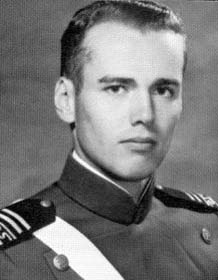
Michael Rex Anderberg
"Mike"
d 2024

Biography as of Nov 18, 2024
Michael Rex Anderberg Retired Lt Col Air Force 85:
00-15: MDAP Cost Analyst, Office Secy Defense PA&E, NC;
97-00: Consultant Decisive Analytics Corp Arlington VA;
96-97: Consultant Science- Applications Intl Corp Arlington VA;
91-96: Sr Cost Analyst OSD Pentagon;
89-91: Sr Operations Analyst Cen Naval Analyses Alexandria, VA;
87-89: Operations Eval Gp, CINC US Atlantic Fleet, Norfolk VA;
85-87: Sr Operations Analyst t/ Cen Naval Analyses WADC;
83-85: Verification Policy Council OASD (Policy) Pentagon;
79-83: C Atmospherics Br AFTAC Patrick AFB;
75-79: Operations Research Analyst, Studies Analysis& Gaming Agency Pentagon;
71-75: Staff- Development Engineer Assistant, Study Support, Kirtland AFB;
71: PhD Operations Research, Univ TX;
67-69: Executive Officer, AF Aero Propulsion Lab Wright Patterson AFB;
65-67: MSE Aero / MPA National Security Affairs Princeton Univ;
1DMSM-2MSM-1AFCM
35th Reunion (1998): Following graduation, attended Princeton University for master’s degrees in (1) Public and International Affairs and (2) Aerospace Engineering. Assigned to Air Force Aero Propulsion Laboratory at Wright-Patterson AFB, OH to build computer models of thermodynamic cycles for turbine engines. Moved up to laboratory Executive Officer for two years, handling administrative and personnel matters for a staff of 350 civilians and 50 military. AFIT offered opportunity for Ph.D. in operations research at University of Texas, wrote a dissertation entitled Cluster Analysis for Applications, later published in Academic Press series on Probability and Mathematical Studies. Went to Office of Aerospace Studies, Kirtland AFB, NM and worked in wide variety of mission-area analyses. First posted to D.C. at Studies, Analysis, and Gaming Agency of the JCS. Led team that produced annual Red Integrated Strategic Offensive Plan (RISOP), a detailed assessment of hypothetical Soviet strike plans for general nuclear war. Wrote concise illustrated presentation of results and briefed hundreds of audiences ranging from missile crews to White House. Escaped D.C. by moving to Air Force Technical Applications Center, Patrick AFB, FL. Headed a branch and managed worldwide program of atmospheric sampling for nuclear debris. Later organized new branch to develop equipment and software, maintain configuration control, and supply data base management services. Returned to Washington and the Office of the Assistant Secretary of Defense (International Security Policy). Represented DOD views at interagency deliberations on arms control definitions. Analyzed Soviet missile logistics and operations to develop workable treaty provisions. Retired from Air Force in 1985 and moved to Navy think tank, Center for Naval Analysis. Air Force background was key during assessment of Navy’s target analysis process for air-strike planning. As a result, Navy realigned its approach to target planning, even creating anew officer specialty. Spent two years in Norfolk, VA on field assignment as the operations analyst to Commander-in-Chief, Atlantic Fleet, just as the services were drawn into the war on drugs. Responding to the question, “How would we know we were doing any good?,� wrote a treatise on measures of effectiveness, emphasizing detailed applications to anti-drug missions. After six years with the Navy, returned to the Pentagon in Office of Director, Program Analysis and Evaluation, Office of the Secretary of Defense. Conducted independent cost analysis and reviews for major defense acquisition programs, principally ballistic missile defense systems. Conceived approach to cost risk analysis for Cost Analysis Improvement Group (CAIG). Developed policy for treatment of environmental costs in acquisition programs. Left Civil Service in 1996, but continued part-time consulting on costs of ballistic missile defense. Built retirement home in Urbanna, VA on four acres fronting a backwater of the Rappahannock River, about 10 miles upstream from Chesapeake Bay. Birds, butterflies, wildflowers, amphibians, and four grandchildren are my passions now.