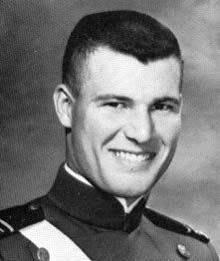
Robert Steve Dotson
"Steve"

Service
United States Air Force
Highest Rank
Brigadier General
Years of Service
30
Combat
Yes
Biography as of May 07, 2012
Following graduation from the Academy, and after a year of pilot training, General Dotson served as an instructor pilot in the T-38 basic trainer for four years. In 1969, he completed gunnery school in the F-105 fighter and flew it on 128 combat missions that year and during 1970. He led combat formations and received the Distinguished Flying Cross and eight Air Medals for his wartime service. Afterward, he completed the two-year M.B.A. program at the Harvard Business School in 1972, graduating with honors, and then served for four years at the Pentagon in the Office of the Assistant Chief of Staff of the Air Force for Studies and Analysis. In 1976, he resigned from active duty and joined the Air Force Reserve. While at the Pentagon, he participated in groundbreaking study efforts that led to procurement of the A-10 tank killer, the F-16 multi-role fighter and the E-3 radar sentry (also called the AWACS). After becoming a civilian, he served in government as a national-security specialist for two decades, both in the Executive Office of the President and on the professional staff of the Armed Services Committee of the U.S. Senate. Along the way, he helped acquire advanced airlift and sealift capabilities that had enormous payoff in the Gulf War (1991). In 1986, he served as a staff member of the Packard Commission that led to key reforms of the Defense Department, including the creation of U.S. Transportation Command that also made major contributions to the allied effort in the Gulf War. He retired from the Air Force Reserve in 1993 and retired from government service as a civilian in 1997. He is the author of The Light on the Star, a work of historical fiction about America during the sixties and about the war in Vietnam. It was published in 2005. General Dotson is married to Anne Nye Mastin of Hastings, Nebraska. They have five children and six grandchildren.