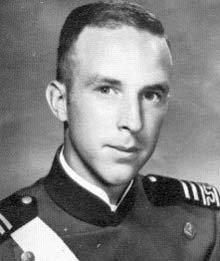
William Roger Povilus
"Rep"

Service
United States Air Force
Highest Rank
Colonel
Years of Service
26
Combat
Yes
Biography as of Apr 02, 2013
WILLIAM ROGER POVILUS an autobiographical sketch Not the best of times ' The threat of war dominated newspaper headlines, the national economy was in disarray, and political parochialism had constipated the Congress. Not 2013, but rather the pre-WWII period of 1940/1941. It was under this shadow of insecurity that my father, Peter Paul Povilus married his high school sweetheart, Anita Theresa Gall, and optimistically started a family. I was the first of three sons and a daughter to be born into the Povilus household -- the oldest and destined to grow up separated from the others by four, eight and nine years. We were a struggling lower middle class family. My father worked two jobs and pursued a college education at Northwestern University in his spare time. All of this is to say my mother raised us for the most part: those early years growing up in a suburb west of Chicago were quiet and uneventful. Except for the airplanes! We lived under the flight path of commercial traffic heading west from Chicago's Midway Field and the big bombers (B-36s) struggling to gain altitude as they climbed north out of Chanute Field. I can recall wanting to be a pilot when I grew up rather than a fireman or priest like the other kids. The nuns at St. Hugh grammar school engendered a strong sense of discipline and drive during the eight years of their tutelage. To supplement a meager allowance I had a paper route starting in the third grade and worked part time in a local grocery store from the age of fourteen. While not physically built for athletics (tall and skinny) I nonetheless was pretty involved with softball and swimming during the summers. The local teen club was high on the list of weekend destinations and noted for putting on amateur theatrical productions. I played Colonel Purdy in "Teahouse of the August Moon" (a portent of things to come?). Boys State in Springfield, Illinois (1958) and graduation in 1959. Academics had come easily and I graduated at the top of my class. Following a parochial primary education with four years in a Catholic high school was the way it was done. I attended St. Mel High School on Chicago's near west side along with some of my best friends. Again, discipline and academic excellence was the byword in this all male environment. I selected a pre -college curriculum and graduated fourth out of 500. Several follow-on options were available: I had won a four year full tuition, full book scholarship to the University of Illinois as well as an appointment to the U.S. Air Force Academy. My mentor was Congressman Ed Derwinski. I still wanted to fly -- the choice was easy. Being placed in an academic environment with 800 other cadets who were top dog in their high school graduation classes was a humbling experience. In addition to the academic challenges/ activity on "the fields of friendly strife" was a real test for me. I managed to keep up physically and after doolie (freshman) year, I knew the Air Force was the life for me. Many fell by the wayside during the next four years and only 495 stood proudly at graduation in June 1963. I was in the middle of the pack. Did I leave a mark on that institution sitting boldly at the foothills of the Rockies? Seems to me there is a plaque on the fieldhouse wall that reads "Cadet William R. Povilus, All-American (pistol), 1962, 1963" (The Academy's first). Piloting a new baby blue Austin Healey 3000 Mk11, I left Colorado and headed to Moody AFB, Valdosta, GA for undergraduate pilot training. Six months of T-37 academics and flying followed by another six months and 100 hours in the T-33 and I was awarded my wings ' one of the proudest, sunniest afternoons in my life! I was ordered to report to F-102 Delta Dagger training at Perrin AFB, Texas! Probably never touching the ground en route, I piloted a recently acquired Mercedes Benz 300SL Gullwing westward. As a sports car enthusiast I found myself doing most of my own mechanical work on what was to be a parade of Porsches, Triumphs and Mercedes. The F-102 was a big, heavy and underpowered interceptor: it was just right for introducing a First Lieutenant to the world of "high and fast." In March of 1965 I was posted to Tyndall AFB, Florida for advanced interceptor training in the F-101 "VooDoo" with the promise of a follow-on assignment to the 60th Fighter Squadron at K.I. Sawyer AFB, Michigan -- my first squadron and a lot more! Shortly after my arrival we won honors as the best fighter interceptor unit in the Air Force. After becoming combat ready in the F-101 I rechecked out in the T-33 and took on duties as head of standardization and training. There in the upper peninsula of Michigan (on a cold and snowy day) I met my future roommate. Priscilla Frances Symmonds was a senior at the University of Northern Michigan in Marquette. Her home was only a few miles away in the small town of Iron River. There was a small conflict emerging in Southeast Asia and being a healthy, energetic and patriotic young man looking for excitement I volunteered for duty in Vietnam as a forward air controller. After a few weeks of special operations training and checkout in the 0-1E "Bird Dog" (Cessna 305), I shipped out in August of 1966. Along the way I became involved with certain "special" activities like SOG, Project TallyHo and Operation Sea Dragon. One morning taking off from Khe Sahn in my O-1 after having stood down for almost a week due to bad weather, I observed a battalion sized enemy force within a couple of miles of the base. This led to the infamous battles of Hill 841 and 861. Enough to say that I left Vietnam in late 1967 as one of the most highly decorated forward air controllers to have served: two Silver Stars for gallantry, a Distinguished Flying Cross, and a chestfull of others including a Purple Heart. It was good to get home to the States. My girlfriend Priscilla was still waiting and we were married on Cape Cod the 14th of October 1967. Ours was a pretty active lifestyle ' me flying the "VooDoo" again with the 62FIS in Falmouth, MA and my bride teaching speech and drama at the local high school. During the first six months of our marriage I was off pulling alert in Bangor, Maine and Goose Bay, Labrador more than I was home. Quite an adjustment for my wife but she handled it beautifully. I also had a variety of special flying opportunities come my way that combined with my position as head of training led to a "below-the-zone" (early) promotion to Major. We also were selected for an exchange position in the United Kingdom with the Royal Air Force. Priscilla was pregnant when we traveled to England in January 1969 and life was pretty rough for her while I was out having fun checking out in the Hawker Hunter and then British Electric "Lightning.' The latter was the most advanced fighter interceptor in the world at that time. The thrills of a greater than one-to-one thrust ratio were exhilarating indeed and I combined that performance with a solid background in tactics to good advantage while working with the British. Eric, our first son, was born on September 16th, 1967 while I was deployed with No.29 Sguadron. I arrived home to find my wife having taken it all in stride and wondering why I wasn't out flying somewhere! Our two and a half years in the U.K. were some of the most memorable of our entire career in the Air Force. Deployments worldwide with the RAF were interlaced with many opportunities: I pulled alert in Cyprus and scrambled on Soviet aircraft that were based in Egypt; I also attended the Royal Air Force Safety Officers School in Farnborough. Several safety articles of mine were published in Ministry of Defence journals. Ironically, my position as safety officer found me square in the middle of an aircraft mishap on a cold dark night in January 1971. The aircraft I was flying caught fire about 100 miles out over the North Sea. This is really a barroom story, but in summary I was quite lucky to have survived an ejection/bailout and several hours spent in 43 degree water. The story, written while I recuperated in the hospital, was also widely published, but most importantly, led to the discovery of a design flaw in the fuel system on the Lightning aircraft. The fleet was grounded, redesigned plumbing installed and, I believe, flew with an improved reliability thereafter -- perhaps even saving another fighter pilot from a fate similar to mine. Recovery was quick and complete and shortly thereafter Pris and I received orders for a rotation back to the States so that I could obtain a Master's Degree in Industrial Engineering at Arizona State University. The next 14 months (July 1971 - September 1972) were quite a change in pace. I had been away from academia for eight years and resigning myself to sitting in the library or classroom was not easy. I must have found some spare time though -- our second son, Jeff, was born on September 18th 1972, just two weeks before we left for our next assignment in Colorado Springs, Colorado. As Commander of the 4603rd Management Engineering Squadron, I guided management support services aimed at improving organizational efficiency in the North American Aerospace Defense Command. We did very well and I was soon promoted -- early again -- to Lieutenant Colonel. I was running about five years ahead of my contemporaries and this notoriety led directly to selection as the Command Briefer, a kind of speech writer and speech giver job. The most educational part was working closely with many general officers, especially 'Chappie' James, and flying them around the country in the T-39 Sabreliner. Michael,son #3, was born in Feb 1975 at the AF Academy hospital. Colorado was a great place. We made a lot of close friends and very much enjoyed the recreational opportunities. Both Pris and I spent a lot of time skiing despite a broken shoulder I suffered trying to keep up with her on the slopes at Breckenridge. It was with many tears that we left in May, 1976 and headed for Air War College in Montgomery, Alabama. I can't say that the deep south is where I would like to retire, but we did make many friends and learned to appreciate the culture and heritage. Over the next twelve months I honed my skills as a senior Air Force officer and graduated with honors. Next assignment was thankfully back to the wonderful world of airplanes. Duluth, Minnesota was not our first choice of location but the job, Chief of Weapons and later Director of Operations and Training was excellent. Responsibilities included oversight of all air defense units (flying, radar and communications) in the central United States and Canada. Best of all I was flying again -- T-33s mostly, but also an occasional sortie in the new F-106 Delta Dart. We bought a turn of the century mansion near Lake Superior in downtown Duluth and spent many hours and dollars renovating. The friends we made in Duluth remain some of our closest to this day. They joined us in celebrating another early promotion -- to full Colonel. The downside was a set of orders to a remote (without family) assignment to Alaska as commander of the 13th Missile Warning Squadron -- a ballistic missile warning and spacetrack facility. Great job with many personnel challenges. Returned to the "lower forty-eight" a year later with orders to the Pentagon as Director of Manpower Programs for the Air Force. This was something of a remote tour too, with long office hours on top of lots of wasted time delayed in traffic while commuting. Despite the downside, we loved Washington D.C. - So much to see and do. The entire family stayed busy touring, visiting and learning our nation's heritage as one can only do living in the capitol city. Besides routine programming of manpower requirements for the entire Air Force and defending those annually before the Congress, I had the opportunity to lend a guiding hand in automating the entire programming process. Efficiency and responsiveness increased significantly though not without a struggle between Air Force requirements and contractual software support teams Three years in the five sided building (without flying) was sufficient to convince me that I needed to smell jet fuel again. One phone call in March of 1983 was all it took to send me to Arizona for a checkout in the A-10 "Warthog" as preparation for a reassignment as Deputy Chief of Staff, Operations in Alaska! I hadn't had any air-to-mud flying time (dropping bombs etc) so putting the A-10 through its paces and firing its awesome 30mm gatling gun was quite a thrill. The family (especially my wife) couldn't really believe we were heading to the last frontier but by the time we hit the road in May they were as enthused as I. The trip to Anchorage was an adventure in itself. After Potomac goodbyes we drove ten days straight just to reach the west coast at Prince Rupert, British Columbia. It took four more days on a ferry to reach Haines, Alaska and then 3 more driving days to our destination. Once we were moved in (Elmendorf AFB) I turned my attention to the new job and learned there was more of a challenge than I had been led to believe. My predecessor had been fired for failing to pull together the new Alaskan radar system and the fighter interceptor folks into a cohesive system that could protect the northern approaches to the U.S. and Canada against Soviet attack. My background was ideally suited to the task and within a year we were all pulling in the same direction and were rated "excellent" by the Air Force inspection teams. During this same time the F-15 fighter wing at Elmendorf AFB was having its troubles: four accidents in eighteen months with the fifth killing the wing commander. I convinced the commander of Alaskan Air Command, Lt. General Bruce K. Brown, to let me go in and straighten things out. Unfortunately a few folks had to be fired and flying operations taken "back to basics", but the accident rate and incident rate went to zero for the next three years. The job as Commander of the 21st Tactical Fighter Wing was the highlight of my career -- certainly from an accomplishment point of view. I think the 16,000 military, civilians and dependents that I was responsible for would agree. Alaskan Air Command got a new commander in September 1987 and he asked me to move up and become his vice-commander. Although my wife was getting pretty tired of the cold and cultural vacuum, our boys thought one more year sounded great. I continued to fly F-15s and the T-33 all the while learning how to be a good alter ego to the boss. We also got to meet a lot of interesting people, including President Reagan, many heads of state, Congressmen and a host of other VIPs. During this last year our oldest son, Eric, flew from the nest and started his collegiate studies at Arizona State University. We drove out in May 1988. Our last tour of duty in the Air Force was in Tampa, Florida with the U.S. Central Command. General Norman Schwarzkopf had requested a 'fighter pilot' to head J-1 after firing the former colonel. Can't say that the personnel business is my forte, but I did manage to turn those folks into team players supporting the command's very important mission of protecting our interests in the middle east. Failure to be promoted into the general officer ranks, however, plus the prospect of having staff jobs for the remainder of my career led to a decision to retire. We left the Air Force family in June 1989 after twenty-six wonderful years. Not one moment of regret, but it was time to move on to new challenges -- as a feather merchant. It didn't take long for opportunity to knock. Seems Eastern Air Lines was having a little labor problem and needed experienced pilots to rebuild. I thought about the disadvantages of being a "scab" all of 30 seconds and then hired on as a potential Boeing 727 pilot with the understanding that if I could pass all FAA requirements within 3 months, I would bypass the seniority system and move directly in as a Captain. Training was tough and the next three months were grueling. No slack at the new Eastern Air Lines! It was a proud moment indeed when the CEO presented me with my new wings in a ceremony in Miami. That was in September 1989. I took to flying the B-727 as easily as I had to the fourteen different aircraft I flew during my military career. I found I also had a lot of experience and savvy to contribute -- plus some ideas on cockpit discipline that made folks stand up and take notice. Unfortunately Eastern Air Lines never regained its economic health and could not survive the period of business turndown and high fuel costs. Management had also returned to a tradition, unenlightened and adversarial approach to doing business. What a shame. There was a great opportunity to build a truly "new" airline that could have revolutionized the industry. Opportunity lost! I flew my last segments: Toronto to Atlanta to Ft Myers on Jan 18, 1991. Not one to stay bored for long, I got certified and began teaching algebra and pre calculus (part time) in Tampa area high schools. That led to a position as an Assistant Administrator in the Hillsborough County School system. Taking that job was a mistake (boring and bureaucratic) except it provided a networking opportunity to meet a fast moving entrepreneur who was starting a back office billing and COBRA administration company in Clearwater, Florida. I got hired as Chief of Operations and began an unbelievable 10 year odyssey: From a humble start with 62 employees we grew to 12,000 nationwide, went public and got bought out by a Fortune 100 company. At the end I had been named President and CEO, staying on for 3 months after the 'merger' and then retiring and moving to Las Vegas, NV. Now it is mainly golf, travel and lots of quality time with grandchildren. Military Career Memorables: Becoming First All-American in Pistol for the Academy. Flying/wounded in Vietnam. Deadstickng a T-33 100 miles into Bunker Hill AFB. Taking a T-33 off from a 4000ft runway (Plymouth, MA). Surviving a high Mach/high Altitude ejection mid-winter/night 100 miles at sea. Shooting down a drone at 50 feet MSL in Gulf of Mexico. Rolling a six-by truck with live fire from an A-10. Intercepting Russian aircraft in Egypt and Alaska. BTZ promotions to O-4, O-5 and O-6. Commanding: 4603 MES, 13 MWS, 21 TFW.